As
autumn weather closes in across rural Britain, farm owners and agricultural
engineers are reviewing their emergency backup setups. If you manage a dairy
herd, livestock housing, or grain drying plant, you already know how vulnerable
rural overhead lines are when severe weather hits.
However,
high winds are only half the battle this year. Agricultural holdings across the
UK are rapidly replacing cheap plastic rotary changeover switches due to strict
enforcement of BS 7671:2018+A4:2026 (the "Orange Book" update to the
IET Wiring Regulations), combined with the severe risk of high-wind electrical
failure.
If you
are currently reviewing your site's electrical infrastructure, you can source a
reliable generator manual transfer switch in the UK built to order by
our technical team.
Regulatory
Deadlines and Mechanical Stress Under Farm Loads
The
October enforcement of BS 7671 Amendment 4 has put outdated farm switchboards
under the microscope. Inspectors auditing rural properties are taking a hard
line on unrated plastic rotary switches that fail to provide compliant earthing
isolation or handle heavy inductive surges.
Farm
machinery, such as milking parlour vacuum pumps, slurry mixers, grain augers,
and high-volume ventilation fans, operates on heavy inductive motor loads. When
these large electric motors kick in, they draw a massive initial starting
current that can spike up to six times higher than their normal running draw.
When
an operator turns a basic rotary switch against that kind of electrical surge
during a storm outage, a severe high-voltage arc jumps across the small
internal contacts. This leads to two critical failure modes:
●
Contact Welding: Due to extremely hot arcing, the internal copper
contacts get fused and fix the lever permanently. Thus, once the power grid is
restored, it becomes impossible to go back to using the generator.
●
Non-Compliance and Carbon Track Fires: Plastics used in rotary
switches accumulate carbon dust and heat that destroy internal insulation.
Within the new BS 7671 2026 standard, such plastics pose immediate fire risk
and EICR failure.
Sheet Steel
Enclosures vs Plastic Rotary Units
In
order to meet the current requirements for wiring and to manage the starting
surges in wet agricultural buildings, agricultural plants require tough
switchgear in steel industrial housings.
Our
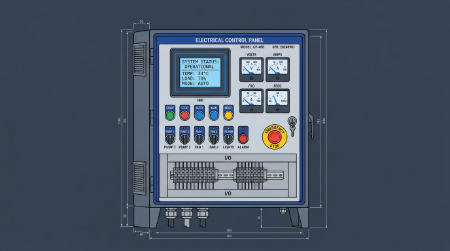
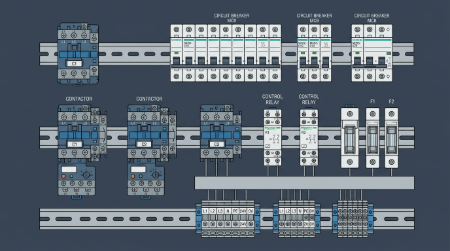
manual transfer panels at Blades Power Generation include robust knife blade
contact mechanisms and mechanical interlocks, conforming strictly to BS EN
standards. This ensures that no connection between mains and generators is ever
possible, protecting the utility engineers from backfeeding during storm
repairs.
Upgrading
your electrical resilience does not require an enormous capital outlay. Many
agricultural businesses pair a heavy-duty changeover panel with well-maintained
secondary plant machinery; it is easy to buy used generators in the UK
from reputable trade specialists, such as Blades Power Generation, to build an
affordable, highly dependable backup system.
Secure Your
Agricultural Power Before the Storms Hit
Do not
wait for an autumn gale to cut your power only to discover your rotary switch
has welded shut or failed its safety inspection.
Speak
directly with our technical support team on 01453 799655 to find the right
manual changeover specification for your farm.